Cutting concrete, brick, masonry, asphalt, or other abrasive construction materials is not simply a matter of choosing a blade with a high diamond concentration. The blade has to match the material, cutting equipment, operating speed, and job conditions. A poor match can lead to slow cutting, excessive segment wear, overheating, or premature blade failure.
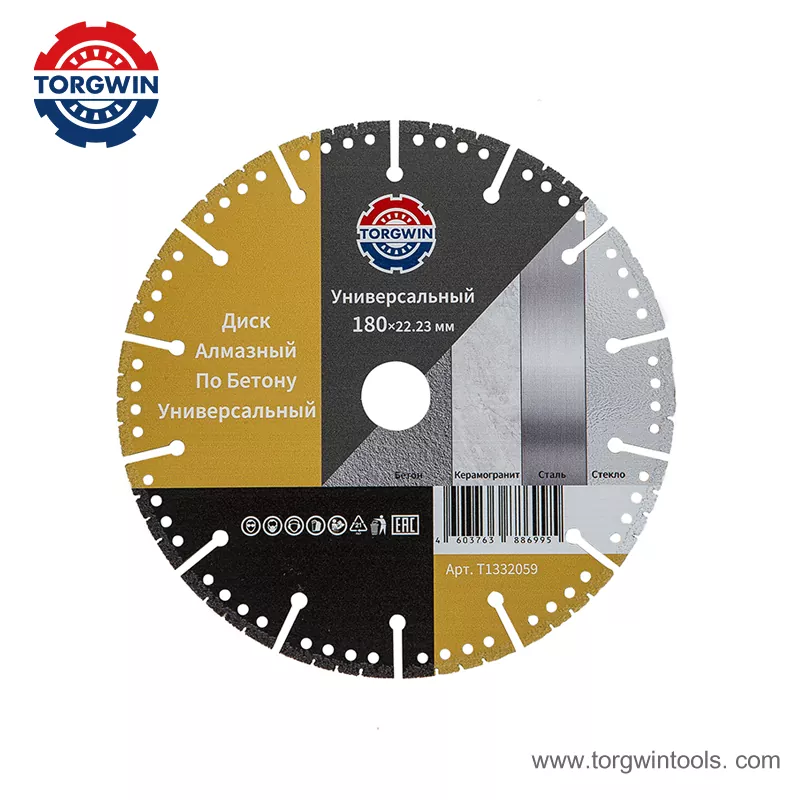
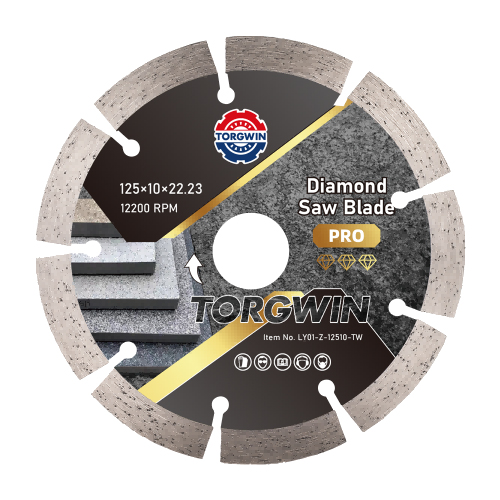
A Segmented Diamond Saw Blade is designed for applications where cutting speed, debris removal, and segment durability are important. Its individual diamond segments create gullets between cutting sections, allowing material and heat to move away from the cutting zone during operation. This makes segmented blades particularly suitable for demanding construction and masonry cutting applications.
A segmented diamond saw blade consists of a steel core with separate diamond-containing segments fixed around the circumference. Unlike continuous-rim blades, the cutting edge is divided into multiple segments with spaces between them.
These segment gaps serve a practical purpose. During cutting, they provide additional space for dust, slurry, and broken material to escape from the kerf. They also help reduce heat accumulation at the cutting edge, which is important when working on thick or highly abrasive materials.
The performance of the blade depends on more than the presence of diamonds. Segment composition, diamond size and concentration, bond hardness, segment geometry, core strength, and manufacturing tolerances all affect how the blade behaves on the job.
Cutting hard construction materials generates substantial friction and heat. The gaps between segments interrupt the cutting edge and create channels for cooling air or water to move through the cutting area. This can help control operating temperature, especially during long cutting cycles.
Concrete and masonry produce large quantities of dust and fragmented particles. A continuous cutting rim can retain more debris in the cutting zone, while the gullets of a segmented blade provide additional clearance for material to leave the kerf.
Segmented blades are commonly selected for applications where cutting speed and durability are more important than achieving an extremely fine decorative finish. They are therefore widely used for concrete, reinforced concrete, brick, block, masonry, asphalt, and similar construction materials.
Blade life is closely related to the diamond bond system and the material being cut. When the segment is correctly formulated for an abrasive material, worn bond material can expose fresh diamond particles progressively instead of allowing the cutting surface to become prematurely glazed.
The correct blade should always be selected according to the material rather than simply choosing the largest or hardest blade available.
| Material | Typical Cutting Requirement | Important Blade Consideration |
|---|---|---|
| Concrete | General construction and structural cutting | Balance cutting speed with segment wear resistance |
| Reinforced Concrete | Cutting through concrete containing steel reinforcement | Segment strength and diamond retention are critical |
| Brick and Block | Masonry cutting and installation work | Fast debris removal and suitable bond hardness are important |
| Asphalt | Road maintenance and pavement cutting | A bond designed for highly abrasive materials is generally preferred |
| Stone and Masonry | General construction and renovation | Blade formulation should match stone hardness and abrasiveness |
For reinforced concrete, for example, a blade intended only for soft masonry may wear too quickly or suffer segment damage. Conversely, an excessively hard bond can reduce cutting efficiency when used on highly abrasive materials because the bond may retain worn diamond particles for too long.
The diamond segment is the working part of the blade. Its formulation determines how the blade balances cutting speed and service life.
Diamond particles perform the actual abrasion. Their size, strength, concentration, and distribution influence how aggressively the blade cuts and how consistently new cutting points are exposed.
The metal bond holds the diamond particles in the segment. A softer bond can wear more quickly and expose new diamonds, which can be useful when cutting highly abrasive materials. A harder bond can provide better diamond retention when working on harder materials.
This is why there is no universal “hardest” or “best” segment formulation. The optimum bond depends on the material and cutting conditions.
Segment height, width, shape, and spacing influence cutting resistance, cooling, debris removal, and blade stability. These dimensions should be engineered around the intended application and machine rather than treated as purely cosmetic specifications.
Choosing between segmented and continuous-rim designs depends largely on the type of cut required.
| Feature | Segmented Diamond Blade | Continuous Rim Blade |
|---|---|---|
| Cutting Speed | Generally suited to fast construction cutting | Often prioritizes controlled cutting and finish |
| Cooling | Segment gaps assist heat dissipation | More dependent on cutting conditions and cooling method |
| Debris Removal | Good clearance through segment gullets | More limited clearance |
| Typical Applications | Concrete, masonry, brick, asphalt | Applications requiring smoother edges |
For heavy construction work where productivity is the priority, a segmented blade is often the more practical choice. When edge quality is the primary concern, another blade design may be more appropriate.
Identify whether the material is soft, hard, abrasive, reinforced, or a combination of these characteristics. “Concrete” alone is not enough information. Concrete strength, aggregate type, reinforcement, curing condition, and age can all affect blade performance.
Blade diameter, arbor size, maximum RPM, and machine power must be compatible. A blade should never be operated beyond its rated maximum speed. The machine type also matters because a blade designed for a high-powered floor saw may not be appropriate for a smaller handheld cutter.
Wet cutting can help control dust and temperature while improving cutting conditions in many applications. Dry cutting can be convenient for smaller jobs or locations where water is impractical, but heat and dust management become more important.
The blade diameter should provide sufficient cutting depth for the application without forcing the operator to make an unsuitable number of passes. The actual usable cutting depth also depends on the machine configuration and blade specifications.
The lowest purchase price does not necessarily mean the lowest cutting cost. A blade that cuts slowly may increase labor and machine operating costs, while a blade that wears too quickly increases replacement frequency. Professional users should evaluate cost per meter or cost per completed job rather than blade price alone.
Slow cutting may result from an unsuitable bond, insufficient machine power, incorrect operating speed, excessive cutting pressure, or a blade that has become glazed. The material should be checked before changing operating parameters.
Rapid segment wear can occur when the blade is used on highly abrasive materials with an unsuitable bond. Excessive side pressure or misalignment can also accelerate wear.
Overheating may indicate insufficient cooling, excessive feed pressure, incorrect RPM, inadequate clearance, or an application outside the blade's intended operating conditions. Continuous overheating should not be ignored because it can affect both blade integrity and cutting performance.
Uneven cutting can be related to machine alignment, arbor condition, blade installation, core deformation, or improper operating technique. Before blaming the segment formulation, inspect the machine and mounting system.
A diamond blade is a precision cutting tool. Consistent performance requires control over both the steel core and diamond segments.
During production, important factors include steel core flatness, segment dimensions, diamond distribution, bond composition, segment positioning, welding or sintering quality, and final blade balance. Even a well-designed segment formulation can perform poorly if the segments are positioned unevenly around the core.
For buyers purchasing segmented diamond saw blades in volume, quality consistency between production batches is particularly important. A sample that performs well does not guarantee that every subsequent batch will deliver the same cutting rate and service life unless the manufacturer has reliable process controls.
Before placing a large order, buyers should provide the manufacturer with as much application information as possible. Useful details include:
Providing these details allows the manufacturer to recommend a more appropriate segment formulation instead of supplying a generic blade.
Large construction contractors, concrete cutting companies, tool distributors, and OEM buyers may have very different performance priorities. One customer may need maximum cutting speed, while another may prioritize long blade life or stable performance across a particular concrete mix.
Customizing segment composition, segment dimensions, blade diameter, core configuration, or packaging can make sense when the application is consistent and purchasing volume is sufficient. The objective should be measurable performance improvement rather than customization for its own sake.
A useful way to evaluate a segmented diamond saw blade is to calculate the cost of cutting a defined length or number of pieces.
Total cutting cost = blade cost + labor cost + machine operating cost + downtime and replacement cost.
A lower-priced blade may become more expensive if it cuts at a significantly slower rate or requires frequent replacement. For professional cutting operations, tracking meters cut per blade, average cutting speed, segment wear, and downtime provides a much clearer picture of real operating cost.
For construction and masonry cutting, the right segmented diamond saw blade should be selected as a complete system rather than as an isolated consumable. Material characteristics, diamond segment formulation, blade dimensions, machine specifications, cooling conditions, and operating technique all contribute to the final result.
If you are sourcing segmented diamond saw blades for concrete, reinforced concrete, brick, asphalt, masonry, or other demanding materials, provide your material and machine parameters to the manufacturer before ordering. A blade developed around the actual application can deliver more consistent cutting performance and help control the cost per cut.
Yes. Segmented blades are widely used for concrete and other construction materials, particularly where fast cutting and effective debris removal are important.
Yes, but the blade should be specifically designed for reinforced concrete. Steel reinforcement can significantly change cutting resistance and segment wear.
Some are designed for dry cutting, while others are intended for wet operation. Always follow the manufacturer's operating specifications rather than assuming a blade is suitable for both.
Possible causes include an unsuitable bond, incorrect RPM, excessive feed pressure, insufficient machine power, glazing, or using the blade on a material outside its intended application range.
No. Diamond concentration must be balanced with diamond quality, bond characteristics, material hardness, and the intended cutting conditions. More diamond is not automatically better.
Use the correct blade for the material, maintain the recommended operating speed, avoid excessive side pressure, provide appropriate cooling when required, and keep the machine properly aligned.
At minimum, provide the material being cut, blade diameter, arbor size, wet or dry cutting requirement, machine type, operating RPM, required cutting depth, and expected application. This gives the manufacturer enough information to recommend a suitable specification.